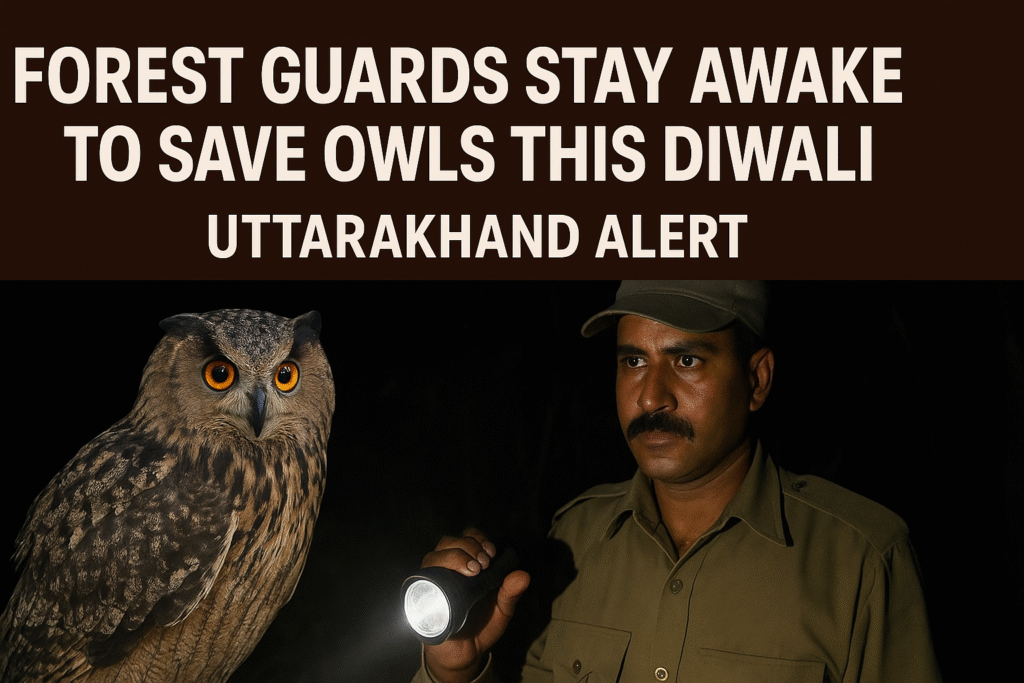
As Diwali lights up homes and skies across India, the forests of Uttarakhand prepare for a very different kind of vigilance. This year, the Uttarakhand Forest Department is on high alert to prevent Owl Poaching – a cruel and illegal practice that often rises during the festive season due to superstition and black magic beliefs.
While the rest of the country celebrates with lights and sweets, forest officials in Dehradun, Malsi Zoo, and the Lachhiwala Range are staying awake all night to ensure that no owl or wild creature falls victim to human greed.
The Dark Side of Diwali: Why Owls Are Targeted
Many people wrongly believe that sacrificing or capturing owls during Diwali brings wealth and good luck. These superstitions, often linked to tantric rituals, have made owls one of the most illegally traded birds in India.
However, the reality is grim. Owls play a vital role in the ecosystem by controlling rodent and insect populations. Their loss can deeply disturb the ecological balance. Under the Wildlife Protection Act, 1972, all owl species are protected, and hunting or trading them is a punishable offence.
Forest Department Steps Up: Night Patrols and Drone Surveillance
This Diwali, Uttarakhand’s forest officials are working round the clock. Teams have been deployed for night vigilance, especially around Malsi Zoo in Dehradun, which houses ten owls of three different species.
To prevent illegal hunting, drone monitoring and extra patrolling have been initiated across sensitive zones. Additionally, the department has banned firecrackers within 100 meters of forest areas and zoos. Loud noise and bright flashes can disorient nocturnal birds like owls, forcing them to flee their nests.
Forest officials are not only guarding wildlife but also spreading awareness through campaigns like “Hoot for Help”, encouraging citizens to report suspicious activities related to wildlife trade.
“Hoot for Help” — A Campaign with a Cause
The Lachhiwala Forest Range has launched an inspiring public campaign called Hoot for Help. This initiative educates locals about the ecological importance of owls and the legal consequences of harming them.
The campaign also highlights how every person—villager, tourist, or city resident—can play a role in wildlife protection. Posters, social media messages, and on-ground volunteers are spreading the message: Diwali is a festival of lights, not of cruelty.
Eco-Tourism and Wildlife Protection: A Shared Responsibility
Uttarakhand’s rich biodiversity is one of its biggest attractions for eco-tourism. From Rajaji National Park to the Jim Corbett Tiger Reserve, the state’s forests are home to hundreds of unique species, including the Himalayan owl.
However, festivals like Diwali can unintentionally disturb these fragile ecosystems. Responsible tourism—such as avoiding loud fireworks near forest zones, reducing plastic waste, and respecting wildlife boundaries—ensures that travelers leave only footprints, not damage.
For eco-travelers visiting Uttarakhand this festive season, the message is clear: celebrate responsibly and help preserve the natural wonders that make this Himalayan state truly special.
Voices from the Ground
Forest officials have stated that anyone caught poaching or trading owls will face strict action under the law. “Our teams are alert round-the-clock. We urge people to report suspicious movement or wildlife activity in their area,” said a senior officer from the Forest Department, Dehradun Division.
This proactive approach reflects a larger vision of conservation—protecting wildlife not just during festivals but throughout the year.
What You Can Do to Help
- 🚫 Avoid fireworks near forests, zoos, or wildlife sanctuaries.
- 📞 Report wildlife poaching or trading to the nearest forest office.
- 🌱 Support local conservation drives or tree-planting initiatives.
- 📷 Promote awareness through social media by sharing positive wildlife stories.
- 🦉 If you spot an injured bird or animal, contact forest rescue helplines instead of trying to handle it yourself.
Together, even small actions can protect Uttarakhand’s incredible biodiversity.
Why This Matters for North Himalayan Readers
At NorthHimalayan.com, we believe that the beauty of the Himalayas lies not only in its mountains and rivers but also in the creatures that call it home. By covering stories like this, we aim to inspire eco-conscious travel and local awareness.
When you visit Uttarakhand—whether for adventure, spirituality, or leisure—remember that you are stepping into nature’s home. Respect it, protect it, and it will reward you with timeless beauty.
FAQs about Owl Poaching in Uttarakhand
1. Why does owl poaching increase during Diwali?
Due to myths and superstitions linking owls with wealth and fortune, illegal poaching rises during Diwali.
2. What is the punishment for owl poaching in India?
Under the Wildlife Protection Act, 1972, owl hunting or trading can lead to imprisonment and heavy fines.
3. How can tourists help prevent owl poaching?
Avoid loud noises near forests, support awareness campaigns, and immediately report any wildlife-related crime.
4. What is the “Hoot for Help” campaign?
It’s a forest awareness initiative launched in Lachhiwala Range, encouraging citizens to protect owls and report illegal activity.
5. Which species of owls are found in Uttarakhand?
Common owl species include the Brown Fish Owl, Spotted Owlet, and Indian Eagle Owl, all protected under Schedule IV of the Wildlife Protection Act.